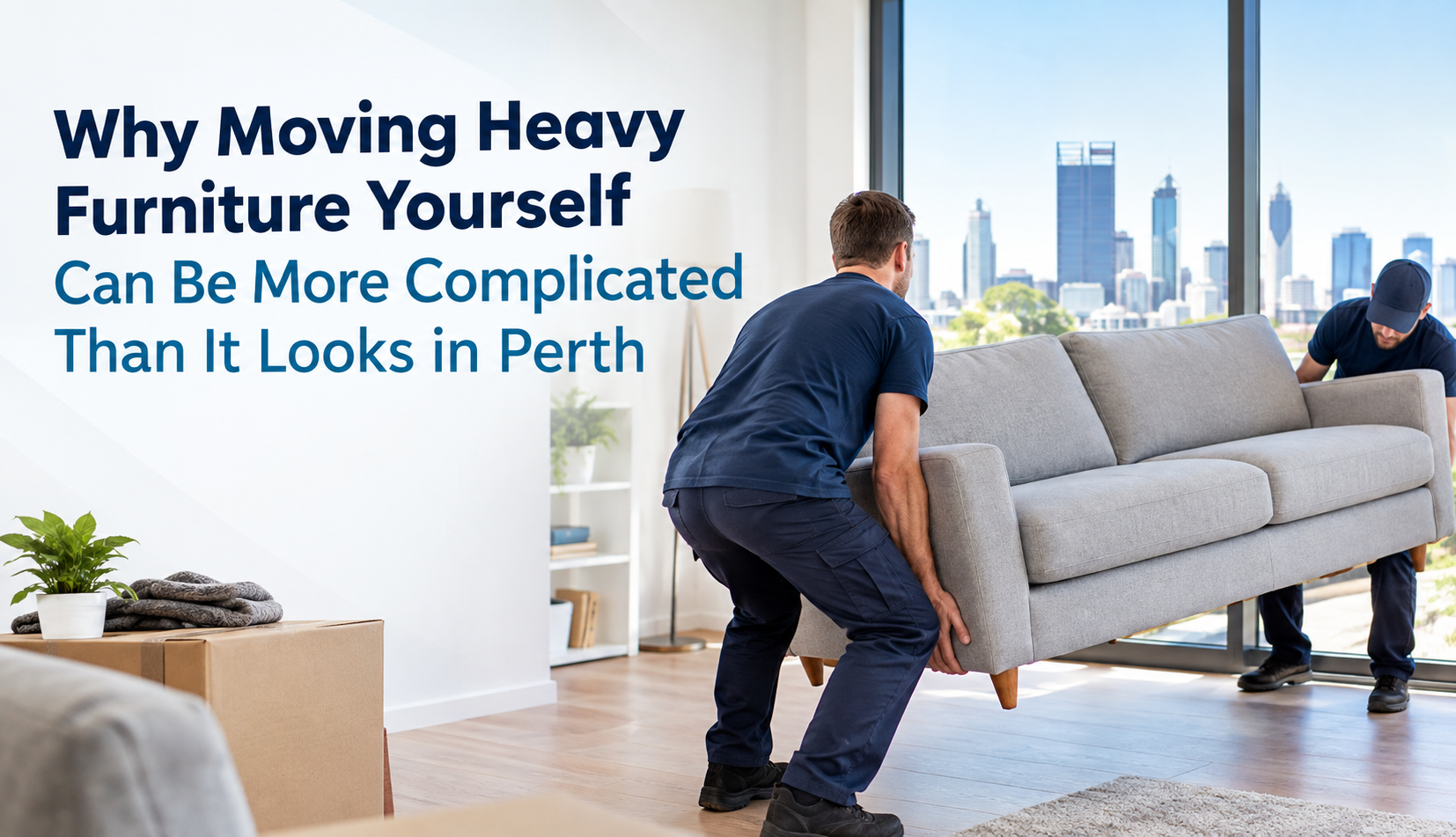
Moving a heavy piece of furniture may look like a simple job. You might think that a few people, a trolley and some muscle are all you need. However, once you start moving a large wardrobe, solid timber table, commercial cabinet or oversized lounge, the job can become much harder.
Heavy furniture can be difficult to lift, carry, turn and load safely. Perth homes and properties can also have narrow hallways, stairs, tight doorways and uneven outdoor areas that make the process more challenging.
This is why moving heavy furniture in Perth requires more planning than many people expect. A safe move is not only about getting the furniture from one room to another. You also need to protect the furniture, your property and everyone involved.
Why Is Heavy Furniture So Difficult to Move?
Heavy furniture is often awkward rather than simply heavy. Its size and shape can make it difficult to get a proper grip or carry it through a tight space.
Large furniture can also have uneven weight distribution. A solid wooden cabinet, for example, may feel much heavier on one side.
Size Can Be a Bigger Problem Than Weight
A large item may not fit through a standard doorway even if several people can lift it.
You may need to:
- Tilt the furniture
- Rotate it
- Remove doors or drawers
- Protect door frames
- Clear hallways
- Carefully navigate corners
A small mistake can leave marks on walls or damage the furniture.
Perth Homes Can Present Different Moving Challenges
Perth has a wide variety of homes and properties. Some have open layouts, while others have narrow entrances, older doorways or difficult access points.
You may also need to deal with:
- Staircases
- Narrow corridors
- Balconies
- Driveways
- Garage access
- Garden paths
- Uneven surfaces
- Limited parking
- Apartment lifts
Before starting moving heavy furniture in Perth, it is important to check the complete route.
Do not only look at the furniture’s current location and final destination. Think about every point between them.
Measuring the Furniture and Access Route
One of the easiest ways to avoid problems is to measure everything before moving day.
Measure the Furniture
Record the:
- Height
- Width
- Depth
Also consider whether the furniture has removable parts.
A large wardrobe may become easier to handle after removing its doors and shelves.
Measure Doorways and Hallways
Measure the clear opening of every doorway along the route.
Also check:
- Door handles
- Door frames
- Ceiling height
- Stair width
- Tight corners
- Lift entrances
Remember that the usable space may be smaller than the overall doorway measurement.
Heavy Furniture Can Cause Injuries
One of the biggest risks of DIY furniture moving is injury.
A heavy item can suddenly shift while being lifted. Someone may lose their grip or place their feet incorrectly.
Common injuries can include:
- Back strain
- Muscle injuries
- Sprains
- Bruising
- Trapped fingers
- Foot injuries
Trying to lift an item that is beyond your ability can make a small moving task into a serious problem.
More People Do Not Always Make It Safer
It may seem that adding more people automatically makes heavy furniture easier to move.
That is not always true.
Too many people around a large item can make communication difficult. Someone may push while another person is trying to turn the furniture.
Clear instructions and proper equipment are often more useful than simply adding extra people.
Protecting Your Floors and Walls
Heavy furniture can easily damage flooring during a move.
Dragging an item across the floor can leave scratches, dents or marks.
This can be particularly concerning with:
- Timber floors
- Tiles
- Polished concrete
- Vinyl
- Laminate flooring
Use suitable protective materials and avoid dragging heavy items whenever possible.
Walls and door frames also need protection. A large piece of furniture can easily scrape a wall when moving around a tight corner.
Professional moving heavy furniture in Perth services can use suitable equipment and protective materials to reduce these risks.
Furniture Can Also Be Damaged
Your property is not the only thing at risk.
Heavy furniture can suffer damage when handled incorrectly.
Common problems include:
- Scratched surfaces
- Broken legs
- Cracked panels
- Damaged handles
- Broken hinges
- Loose joints
- Dented corners
Older furniture can be especially delicate.
Before moving anything, check whether it has loose parts or existing damage. This can help you decide how it should be handled and protected.
Why the Right Equipment Matters
Professional furniture movers do not rely only on physical strength.
They use equipment designed to make heavy items easier to control.
Common Moving Equipment
Depending on the job, equipment may include:
- Furniture dollies
- Moving straps
- Trolleys
- Protective blankets
- Furniture pads
- Ramps
- Lifting equipment
The correct equipment can reduce the amount of manual lifting required.
It can also provide better control when moving large items through narrow spaces.
For difficult moving heavy furniture in Perth jobs, using suitable equipment can make a significant difference.
Stairs Make the Job More Complicated
Stairs can turn a straightforward move into a difficult one.
Carrying a heavy item upstairs or downstairs requires careful coordination. The people at the lower end may have to support a significant amount of the weight.
There is also less room to recover if something starts to slip.
Check the Staircase Before Moving
Look at:
- Stair width
- Ceiling height
- Landing space
- Handrails
- Corners
- Steps leading to the property
If the furniture cannot be safely carried through the staircase, consider another access route.
Do not attempt a risky lift simply because the furniture needs to reach another floor.
Moving Furniture In and Out of Apartments
Apartment moves can have additional challenges.
You may need to work around:
- Building access rules
- Lift sizes
- Shared hallways
- Loading zones
- Parking restrictions
- Other residents
Always check whether the building requires a booking for the lift or loading area.
Measure the lift before moving a large item. A piece of furniture that fits through the apartment door may not fit inside the lift.
Outdoor Access Matters Too
The path from the property to the moving vehicle can also create problems.
A driveway may have a slope. A garden path may be uneven. A narrow gate may restrict access.
Weather can also affect outdoor moving conditions.
Wet surfaces can become slippery, increasing the risk of losing control of heavy furniture.
Before moving heavy furniture in Perth, inspect the outdoor route as carefully as the indoor route.
Avoid Rushing the Move
Moving heavy furniture quickly does not necessarily make the job easier.
Rushing can lead to:
- Poor lifting technique
- Missed obstacles
- Damaged walls
- Dropped furniture
- Injuries
- Broken equipment
Take time to plan the route before lifting.
A few minutes of preparation can save much more time later.
When Should You Hire Professional Movers?
DIY moving may work for small and manageable items. However, professional help is worth considering when furniture is particularly large, heavy, valuable or difficult to access.
Consider professional assistance if:
- The furniture is too heavy to lift safely
- You need to use stairs
- The item does not fit easily through a doorway
- You have limited help
- The furniture is valuable or fragile
- You need to move multiple oversized items
- You need loading or transport assistance
- You are concerned about damaging your property
Professional movers can assess the job before starting and choose the appropriate equipment and moving method.
How to Prepare Before the Movers Arrive
Good preparation can make the moving process much smoother.
Clear the Path
Remove boxes, rugs, plants and other objects from the moving route.
Empty the Furniture
Remove loose items, drawers and shelves where appropriate.
This can reduce weight and make the furniture easier to handle.
Secure Doors and Drawers
Make sure moving parts are protected so they do not open during transport.
Communicate Access Problems
Tell the moving team about narrow entrances, stairs, lifts or other difficult areas before the job begins.
This allows them to prepare properly.
Final Thoughts
Moving heavy furniture yourself may seem like a quick way to save money, but the job can become complicated when you add tight doorways, stairs, awkward furniture shapes and long carrying distances.
Planning the route, measuring access points, protecting your property and using suitable equipment can help reduce the risks. However, some jobs are better handled by experienced professionals.
If you need reliable moving heavy furniture in Perth assistance, professional support can make the process more organised and safer for everyone involved.
For large, awkward or difficult-to-transport items, Forte Heavy Removals & Logistics can assist with professional oversized furniture transport Perth, helping you move heavy furniture with the right planning, equipment and care.